🧑🏫
Too little speaking time
In many classrooms, each student gets only a small amount of live speaking time, which means not enough repetition under pressure.
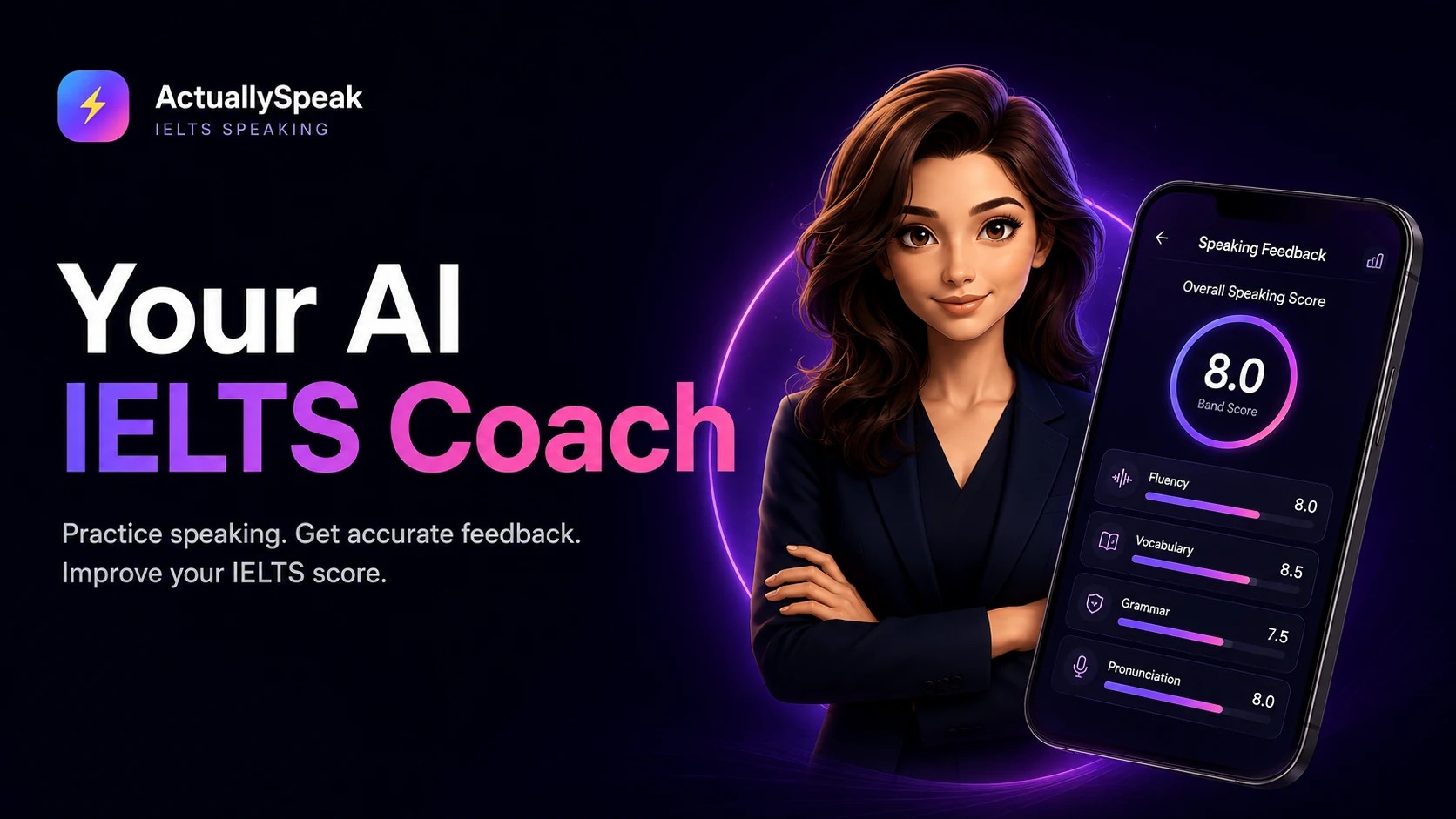
Most IELTS students are stuck in a pattern: large classes, very little speaking time, delayed feedback, and generic AI that sounds smart but does not really train IELTS performance. ActuallySpeak was built to solve that exact gap.
If you are 1 person in a class of 30, you do not get enough speaking time. If your feedback arrives late, you repeat bad habits. And if you use generic AI, it may give you false confidence because it is not tightly built around the IELTS Speaking exam.
In many classrooms, each student gets only a small amount of live speaking time, which means not enough repetition under pressure.
Even good teachers cannot give instant, individual feedback on every answer when the class is large and time is short.
General AI can talk well, but it does not automatically think like an IELTS examiner or coach unless the whole system is built around that job.
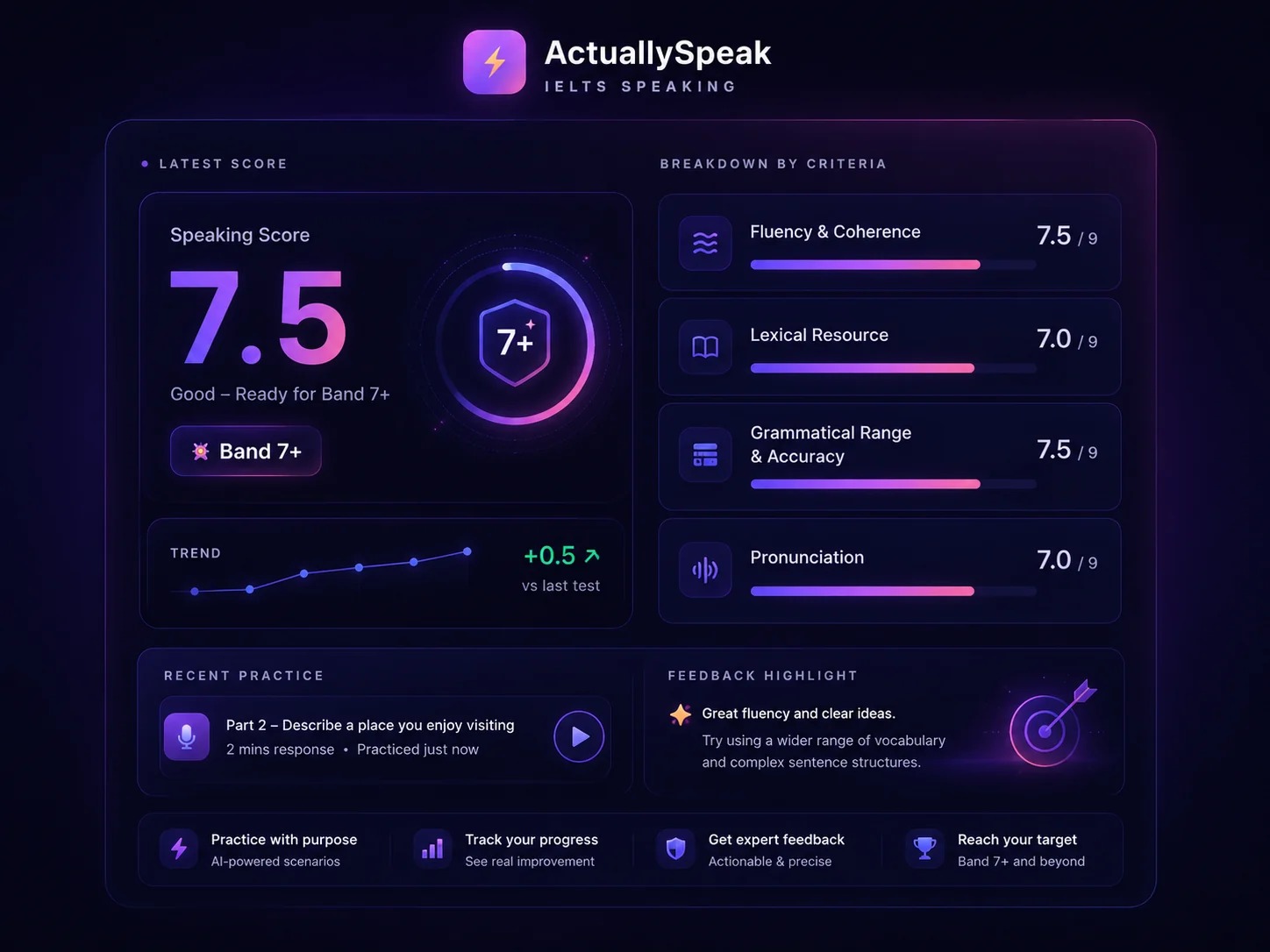
ActuallySpeak is designed to show learners a usable speaking result and a breakdown that points to what should be trained next. Instead of “good job” or “try to speak more,” the goal is clearer diagnosis and a more targeted practice path.
ChatGPT is excellent for broad conversation and flexible prompting. Some top AI speaking apps are strong for pronunciation or general language learning. ActuallySpeak is narrower on purpose: it is built to train IELTS Speaking performance.
| What the learner needs | ChatGPT | Top AI speaking apps | ActuallySpeak |
|---|---|---|---|
| Open conversation and flexible prompts | Strong | Varies | Possible, but not the main job |
| Strict IELTS Speaking focus | Possible with setup | Usually broader than IELTS | Core design goal |
| Feedback that follows IELTS criteria | Prompt-dependent | Often general speaking feedback | Built into the system logic |
| Pronunciation coaching connected to IELTS performance | Possible, not specialised | Often a strength | A major differentiator |
| Designed around Parts 1, 2 and 3 | Can simulate | Not usually the main structure | Built around the exam flow |
| Built from an IELTS coach's method | No fixed IELTS method | Usually general product design | Yes |
This page is intentionally focused on problem awareness and solution awareness. It is not trying to “beat” general AI. It is showing why a specialised IELTS Speaking tool exists.
ActuallySpeak comes from a simple pattern seen again and again: students know English better than their speaking score shows, but they do not get enough speaking reps, enough real-time correction, or a system built tightly enough around the exam. The product was created to bring coach-style diagnosis and repetition into a format students can use every day.
Students can practise far more often than they can in a crowded classroom.
Learners do not have to wait days to discover what went wrong in an answer.
Practice is shaped around IELTS Speaking, not broad “English confidence” alone.
The system exists because an IELTS expert wanted tighter, more useful practice for students.
Take the free IELTS Speaking test first. It is the fastest way to move from guessing to knowing what needs work.